Pool Clean
  • Home
  • Contact
  • About
  • Services
  • Privacy Policy
  • Sign In
  • Create Account

  • My Account
  • Signed in as:

  • filler@godaddy.com


  • My Account
  • Sign out

Pool Clean

Signed in as:

filler@godaddy.com

  • Home
  • Contact
  • About
  • Services
  • Privacy Policy

Account


  • My Account
  • Sign out


  • Sign In
  • My Account
Bright green algae-filled backyard pool with oak leaves floating beside a brick coping in a Prosper

Green Pool Recovery in Prosper, TX

Keeping your pool spotless — owner-operated pool service in Prosper, Celina & McKinney

Get a Free QuoteCall 469-200-3420

✓ Owner-Operated

🛡 Photo Report After Every Visit

⭐ 5-Star Rated on Google

⚡ No Contracts

What's Covered on This Page

  • Decide Between a DIY Shock and a Full Recovery Call
  • Identify What Turned the Water Green
  • Rule Out a Full Recovery When Algae Is Only a Spot Problem
  • Know What Water Testing Confirms Before Anyone Shocks the Pool
  • Understand Why Clear Water Isn't Automatically Safe to Swim
  • How long does a green pool take to clear up once treatment starts?
  • Can I swim in my pool as soon as the water turns clear again?
  • Why does my salt pool keep turning green even though the control panel looks fine?

Need help with a green pool?

469-200-3420

Free quote, no contracts

Decide Between a DIY Shock and a Full Recovery Call

A pool that just started to tint green, with clear water and working equipment, can often be handled with a shock you buy at the store. A pool you can't see into, one that's been green for a while, or one that keeps coming back after you've treated it needs more than chemicals. That's when a full recovery visit makes sense.

Green, murky backyard pool behind a lounge chair and lawn, a Prosper TX homeowner's DIY-or-professio

We'll be straight with you. Some green pools just need one good treatment and a little patience.

You can probably handle it yourself if these are true:

  • You can still see the main drain clearly from the deck.
  • The water turned green in the last few days, not weeks.
  • Your pump and filter are running the way they normally do.
  • There isn't a layer of leaves or debris sitting on the floor.

If that's your pool, a store-bought shock may be enough. Follow the label on the product, since EPA treats the word shock as a pesticide claim (see how EPA defines pool shock). Never mix shock with other pool chemicals, and test the water before anyone gets back in.

It's time to call for a full recovery if you're seeing any of these:

  • You can't see the floor or the drain at all.
  • The pool has been green for more than a week, or it went green while you were out of town.
  • You've already shocked it once or twice and the green came back.
  • Leaves and debris are piled on the bottom.
  • Something seems off with the pump, filter, or salt system.

Here's why a second or third bag of shock often doesn't work. When there's a lot of algae and debris in the water, the chlorine gets used up fighting all of it. It can run out before the job is done. The filter fills up with dead algae and stops pulling it out of the water. And if your pH is off, the chlorine you add doesn't work as hard as it should. You can pour in more and still end up right back where you started.

A recovery visit looks at the whole picture, not just the color of the water. That means getting the debris out, cleaning the filter, brushing the walls, and checking that the equipment is doing its part. We also balance the water with the LSI method, so it's sanitary and not just clear. Water that looks clean can still be out of balance, and that's how a pool turns green again a week later.

You'll also get a photo report after the visit. It shows your chemistry readings and when it's safe to swim, so you're not guessing.

Timing matters here in Prosper. Our summer heat helps algae grow fast. A pool that's only a little cloudy in early summer can go dark green in days once the heat sets in.

Identify What Turned the Water Green

Green water is a symptom. Algae only takes over when something lets it, and if that something isn't fixed, the pool turns green again no matter how clear it gets this week. So before we talk about clearing it, it's worth figuring out what went wrong.

Most green pools come down to one of five causes. Sometimes it's two or three at once.

  • The chlorine ran out. A missed week, a vacation, or a big weekend of swimmers can use up what was in the water. Once chlorine hits zero, algae has an open door.
  • The water isn't moving enough. A pump timer set too short, a clogged skimmer or pump basket, or a dirty filter means some of the water never gets cleaned. Algae starts in those still spots first.
  • The salt system stopped keeping up. A salt cell can look like it's running fine while it puts out very little chlorine. Scale buildup on the cell is a common reason.
  • Too much stabilizer built up. Chlorine tablets add stabilizer every time they dissolve. Over a season or two, it can pile up high enough to slow your chlorine down, even when your test strip shows chlorine in the water.
  • A storm changed everything overnight. Heavy rain waters down your chemicals and washes in dirt, leaves, and yard runoff that feed algae.

You can often tell which one you're dealing with by where and how the green shows up.

  • Green only on the steps, in the corners, or behind a ladder points to poor circulation.
  • The whole pool went green fast after a storm or a busy weekend points to chlorine that got used up.
  • Green that keeps coming back in a pool that uses tablets points to stabilizer buildup.
  • A salt pool that's green while the control panel says everything's on points to the cell or the system settings.
  • Green that showed up while the pump was off or making odd noises points to an equipment problem.

Here in Prosper, spring storms can drop a lot of rain and blow debris into a pool in a single afternoon. If your pool was fine before a storm and green two days later, that timing tells you a lot. The rain likely knocked your chlorine down and brought in plenty for algae to feed on.

This is why we look at more than the water when we show up for a green pool. We pull and hose off the skimmer and pump baskets, check the filter, and look at how the pump and salt system are running. If something on the equipment side is the real cause, you'll know about it. Fixing the water and leaving a weak pump or a scaled salt cell in place just sets you up to see green again.

If the cause turns out to be equipment, that's a separate repair, and we'll tell you plainly what we found. If it's a routine problem, like chlorine running out between visits, steady weekly maintenance from Pool Clean is usually what keeps it from happening again. Either way, you'll understand why your pool turned green, not just that it's clear now.

A quick note if you're testing at home. Test strips can tell you a lot, but they won't always catch high stabilizer or a salt cell that's barely working. If your numbers look fine and the pool is still green, that's a strong sign the problem is something the strip can't show you.

That same focus carries through the practical pool clean guidance our team provides to local families.
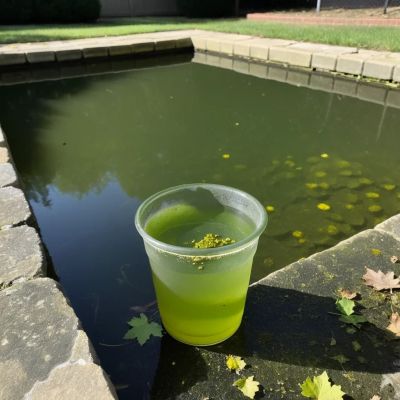
Clear cup of cloudy green pool water with oak leaves and pollen on the stone coping of a Prosper TX

Rule Out a Full Recovery When Algae Is Only a Spot Problem

Some pools that look like they need a recovery really don't. If your water is clear and your chlorine reads normal, but there's a green patch in one spot, you're dealing with a spot problem, not a green pool. Those are different jobs.

A spot problem usually looks like this:

  • A fuzzy green patch on a step, in a corner, or behind the ladder
  • Clear water everywhere else, and you can see the drain easily
  • Chlorine and pH that test where they normally do
  • A patch that wipes off or fades when you brush it

If that matches what you see, start with a stiff nylon brush. Scrub the spot hard and keep scrubbing it every day for a few days. Make sure your skimmer and pump baskets are clear so the water keeps moving. Those tucked-away spots are where water moves least, so check that a return jet is aimed to push water toward that area. Keep your chlorine in its normal range while you do this.

If the patch is gone and stays gone, you're done.

It's also worth ruling out things that aren't algae at all. These come up a lot, and more chemicals won't fix any of them:

  • Pollen: a yellow or green dust that floats on top and collects in the skimmer. It skims off and doesn't stick to the walls the way algae does.
  • Stains: brown or dark marks from leaves or metal that don't come off when you brush. Algae lifts with brushing. Stains usually don't.
  • A green tint in clear water: if the water is see-through but has a green color, especially right after shocking, metals in the water can be the reason. That's a chemistry issue, not an algae bloom.

If you've got one of those, adding shock won't help, and a full recovery isn't the right fix either.

Here's when a spot problem stops being small:

  • The patch comes back within a few days, even after you brush it every day
  • It spreads to a second or third area
  • The water starts to turn cloudy
  • You find dark, almost black spots that won't brush off

Black spots deserve a special mention. Black algae roots into the plaster, so a quick scrub won't get rid of it. It's stubborn, and it tends to come back if it isn't handled with care.

Once the water itself starts to change, the spot has spread past what brushing alone can handle. Until then, a brush, a basket check, and steady chlorine are often all a small patch needs.
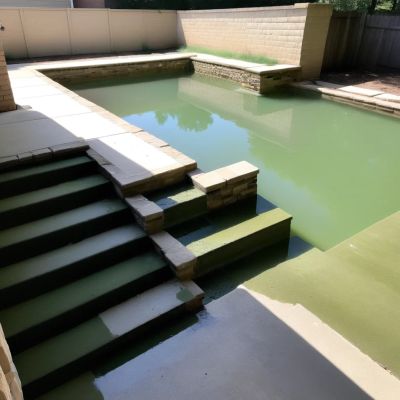
Algae staining on the pool steps and wall of a Prosper TX backyard pool where the problem is localiz

Ready for help with your pool?

469-200-3420

Call us for a free quote.

Know What Water Testing Confirms Before Anyone Shocks the Po

Shock is a guess until you test. The color of the water tells you algae is winning. It doesn't tell you why, and it doesn't tell you whether more chlorine will help. A good test answers that before you spend money on chemicals that might not work.

Here's what testing confirms:

  • Whether you have chlorine at all. If free chlorine reads zero, the algae had an open door. If chlorine is there and the pool is still green, something is keeping it from working.
  • Free chlorine vs. combined chlorine. Free chlorine is the part that's still fighting. Combined chlorine is the part that's already been used up. A pool can show plenty of total chlorine and still have very little left that can kill algae.
  • Your pH. When pH runs high, chlorine works much weaker than it should. You can add shock to high-pH water and get far less out of it than the bag promises.
  • Stabilizer level. Buildup from tablets can slow chlorine down. Only a test shows how high it's gotten.
  • Signs that it isn't algae. If the water is clear with a green tint, a metals issue may be the cause, and more shock won't fix it.

Testing can't confirm everything, though. A single reading doesn't prove the water is safe for swimmers. It shows where things stand right now. During a recovery, those numbers move fast as chlorine burns through algae and debris, so one good reading in the morning doesn't mean the pool is ready that afternoon.

This is where clean and sanitary part ways. Clean means you can see the bottom. Sanitary means the water has enough working chlorine to keep germs and algae in check, and it's balanced so that chlorine can do its job. A pool can look clear and still fail that second test.

Our team uses the Langelier Saturation Index, or LSI, to check balance. LSI looks at several readings together: pH, alkalinity, calcium hardness, water temperature, and dissolved solids. It tells us whether the water leans corrosive, meaning it can eat at plaster and metal parts, or scale-forming, meaning it can leave crusty deposits on surfaces and equipment. Getting a green pool back usually takes large chemical additions, and those can push balance off in either direction. Checking LSI after the algae is gone keeps the fix from creating a new problem.

Temperature is part of that math, and it matters in Prosper. The same water can test balanced in April and drift out of balance in July once summer heat warms the pool. That's one reason we don't treat a recovery as finished the moment the water looks blue.

If you're testing at home before you shock, write down free chlorine, pH, and stabilizer at the very least. If chlorine is present and the pool is still green, check pH and stabilizer before adding more shock, since those are the usual reasons chlorine isn't working.

When we handle the recovery, the readings go on your photo report along with the safe-to-swim time. You'll see the numbers yourself instead of taking our word for it.
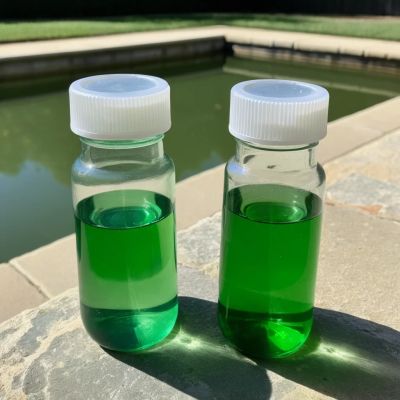
Two sample vials of green pool water on the stone coping ready for testing at a Prosper TX pool

Understand Why Clear Water Isn't Automatically Safe to Swim

Picture this. You've been fighting a green pool all week, and Friday afternoon it finally turns blue. The kids are already asking if they can swim tomorrow. It's a fair question, and it's the one moment in a recovery where a lot of people get burned.

Clear water means the algae has lost the fight. It doesn't mean the fight is over. There's still cleanup going on that you can't see from the deck, and skipping it is the most common reason a pool goes right back to green.

Here's what's often still going on when the water first clears:

  • Dead algae is still in the pool. Once chlorine kills algae, it doesn't disappear. It settles on the floor as a gray or brown dust, and some of it is still floating. Until it's vacuumed out, it keeps using up chlorine.
  • The filter is full of what it caught. A filter packed with dead algae and debris can't keep the water clean for long. It can also hold live algae that seeds the pool again once chlorine levels drop.
  • Chlorine is still being used up fast. The water may have cleared, but chlorine can keep dropping for a while as it finishes off what's left. A reading that looks good one hour can be low a few hours later.
  • Algae can hide where you don't look. Behind the light, inside the skimmer throat, in the corners of the steps, and in the pores of rough plaster are all common hiding spots. A pool can look blue while a few spots are still holding on.

That's why we don't call a recovery finished the moment the color changes. The dead algae and debris come out first. We vacuum before we brush, so we're not just stirring that dust back into the water. Then the walls and those hidden spots get brushed, the filter gets cleaned, and the baskets get hosed off so the water can move freely again.

After that, the water has to hold steady. If the pool clears but loses chlorine again overnight, something is still feeding on it, and the job isn't done. Steady readings over time tell you far more than one good test.

Summer in Prosper makes this harder. Strong sun and hot afternoons burn off chlorine faster, so a pool that's barely holding its numbers in the morning can drop too low by the time everyone's home from school or work. Being patient matters more in July than it does in April.

There's also the question of what swimmers can see. Cloudy or hazy water is a safety problem on its own. If you can't clearly see the main drain from the deck, you also can't see someone who's struggling near the bottom. Clear water isn't a guarantee of safety, but cloudy water is a firm reason to keep everyone out.

This is the reason our photo report includes a safe-to-swim time, not just a set of readings. It tells you when the pool should be ready, based on where the water stands, so you don't have to guess or give in to the Friday afternoon pressure. If the pool needs more time, you'll know that too.
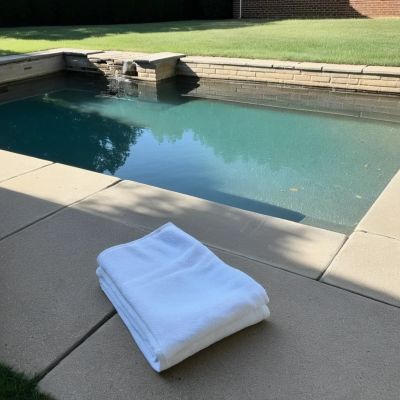
Clear teal pool water beside a folded white towel on the stone deck of a Prosper TX backyard pool

Frequently Asked Questions

Common questions about green pool recovery in Prosper

It depends on how bad the green is, but chlorine can start killing the algae within a day or two once chemicals and circulation are working together, and the full recovery usually takes several days. The water clearing is only part of it, though. Dead algae still has to settle, get vacuumed out, and the filter has to catch what's left before the pool is truly ready. In Prosper's summer heat, chlorine burns off faster, so readings can look good in the morning and slip by afternoon, which can stretch out how long the full process takes.


No, clear water doesn't mean it's safe to swim yet. Dead algae can still be settling on the floor, the filter may still be full of debris, and chlorine often keeps dropping for a while after the color changes. Algae can also hide in spots like behind the light or inside the skimmer throat, so a pool can look blue while a few pockets are still active. Steady chemical readings over time, not just one good test, are what confirm the pool is ready.


A salt cell can look like it is running normally while it is putting out very little chlorine, often because of scale buildup on the cell. This is one of the sneakier causes of a green pool because your equipment panel may not flag it. If your salt system's display says everything is working but the water still turns green, have the cell inspected first.


Ready to Get Started?

Call 469-200-3420 today.

Get a Free QuoteCall 469-200-3420
  • Home
  • Contact
  • About
  • Services
  • Privacy Policy

POOL CLEAN

2813 Little Current Ct, Celina, TX 75009, USA

469-200-3420 | service@poolclean.us

Copyright © 2026 Pool Clean - All Rights Reserved.

Powered by