Pool Clean
  • Home
  • Contact
  • About
  • Services
  • Privacy Policy
  • Sign In
  • Create Account

  • My Account
  • Signed in as:

  • filler@godaddy.com


  • My Account
  • Sign out

Pool Clean

Signed in as:

filler@godaddy.com

  • Home
  • Contact
  • About
  • Services
  • Privacy Policy

Account


  • My Account
  • Sign out


  • Sign In
  • My Account
Blue pool vacuum head and white hose on a shaded concrete deck beside a backyard pool in Prosper TX

Pool Vacuuming in Prosper, TX

Keeping your pool spotless — owner-operated pool service in Prosper, Celina & McKinney

Get a Free QuoteCall 469-200-3420

✓ Owner-Operated

🛡 Photo Report After Every Visit

⭐ 5-Star Rated on Google

⚡ No Contracts

What's Covered on This Page

  • Vacuuming Removes Debris, Not Bacteria
  • Why Debris Builds Up on Prosper Pool Floors
  • How Vacuuming Fits Into a Full Pool Visit
  • When a Homeowner Can Handle Vacuuming Alone
  • What Drives the Cost of Pool Vacuuming
  • Should I vacuum my pool myself or leave it to a pro?
  • Why should I move the vacuum slowly instead of using fast strokes?
  • Why does my pool floor look dirty again just days after I vacuumed it?

Need your pool vacuumed?

469-200-3420

Free quote, no contracts

Vacuuming Removes Debris, Not Bacteria

A vacuum takes out what you can see: leaves, dirt, and grit. It doesn't kill germs or algae. Only the right sanitizer level in balanced water does that, so a pool can look clean and still not be safe to swim in.

Leaf canister full of brown leaves and debris with a black hose on the deck of a Prosper TX pool

Here's something a lot of pool owners don't hear. A pool can be clean and still not be sanitary. Those are two different things, and you need both before your family gets in.

Clean means the debris is gone. The floor is clear, the steps are free of grit, and nothing is floating on top. That's what vacuuming handles. Sanitary means the water can kill bacteria and algae before they grow. A vacuum can't do that. Chemistry does.

Picture a pool in Prosper the morning after a windy night. You vacuum the floor, and it looks great. But if the chlorine dropped overnight, germs and algae can start to grow in water that still looks crystal clear. You won't see the problem until the walls turn slick or the water turns cloudy.

That's why we treat vacuuming and water testing as one job, not two.

Vacuuming still helps the water stay sanitary. Leaves, dirt, and pollen sitting on the floor use up chlorine as they break down. Every bit of debris left behind is something your sanitizer has to fight. Pull it out, and the chlorine can go after what matters. We vacuum before we brush, bag the debris, and haul it off so it doesn't end up back in your yard or your pool.

Having chlorine in the water isn't enough on its own, though. It has to be able to work. That depends on the balance of the water. Our team is trained in the Langelier Saturation Index, or LSI. It's a method that looks at several readings together to tell whether your water is balanced. The main ones are:

  • pH, which affects how well chlorine does its job
  • Total alkalinity, which helps keep pH steady
  • Calcium hardness, the amount of minerals in the water
  • Water temperature, which changes the balance as the seasons change

When those readings are off, water can start eating away at plaster and equipment, or it can leave chalky scale behind. Water that's out of balance also makes your sanitizer less reliable. LSI gives us the full picture instead of a single number.

You don't have to take our word for any of this. After every visit, you get a photo report with your chemistry readings and a safe-to-swim time. You'll see the floor we vacuumed and the numbers that show whether the water is safe. If a pool looks perfect but the readings are off, the report shows it, and we tell you.

So when you compare pool services, ask one simple question: do they just vacuum, or do they test and balance the water too? A clean floor is easy to see. Safe water is what keeps your family healthy, and it only comes from both.

Why Debris Builds Up on Prosper Pool Floors

If you feel like you just cleaned the pool and the floor is dirty again, you're not imagining it. Debris doesn't arrive all at once. It drifts in a little at a time, every day, and most of it ends up on the bottom.

In Prosper, a few things keep it coming:

  • Wind. North Texas gets strong, steady wind, and an open backyard pool catches whatever it carries: dust, grass clippings, and leaves from yards down the street.
  • New construction. Prosper is still growing, and building sites nearby can mean fine dirt and dust in the air that settles on the water.
  • Spring pollen. Pollen coats the surface in spring, then slowly sinks and collects in corners and on the steps.
  • Storms. One hard rain can wash mulch, soil, and leaves from flower beds right over the deck and into the water.
  • Swimmers and pets. Kids, dogs, and bare feet bring in dirt and grass from the yard every time they get in.

Most people expect the skimmer to handle all of this. It helps, but it only catches what's floating. A leaf floats for a while, soaks up water, and then sinks. Fine dirt and silt sink almost right away. Once something is on the floor, the skimmer can't reach it.

Debris also doesn't spread out evenly. Water moves through your pool in a set pattern, and some spots barely get any flow. Corners, the deep end, the steps, and the area under a ladder or bench tend to collect the most. That's why you might see a clean middle and a dirty corner in the same pool.

Leaving it there causes more than a messy look. Wet leaves can leave brown stains on plaster if they sit too long. Dirt on the floor gives algae something to hold onto. And as covered above, everything sitting on the bottom is something your sanitizer has to fight.

This is why vacuuming works best on a steady schedule. A week's worth of debris is easy to pull out. A month's worth has had time to stain, break down, and cloud the water. At Pool Clean, we come the same day every week, so debris doesn't get the chance to pile up. If weather pushes the visit, we let you know ahead of time instead of leaving you guessing.

Weather also changes what we find. After a windy week or a big storm, there's usually more on the floor and more to haul off. We vacuum before we brush so we're not stirring dirt back into the water, then bag the debris and take it with us. We also hose off the skimmer and pump baskets so the system keeps catching what it can.

You can't stop the wind or the pollen in Prosper. What you can do is keep debris from sitting long enough to cause problems, and that comes down to showing up every week and doing the job the same way each time.

That same focus carries through the practical pool clean guidance our team provides to local families.
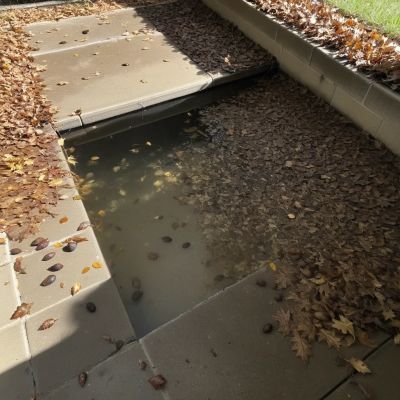
Oak leaves and silt settled on the steps and floor of a Prosper TX backyard pool

How Vacuuming Fits Into a Full Pool Visit

Vacuuming is one part of the visit. It's an important part, but by itself it leaves a lot of the job undone. Here's what a weekly visit with Pool Clean includes and where the vacuum fits.

  • We show up the same day each week in a clean Pool Clean uniform. We park at the curb, not in your driveway, and keep our heads down and focused on the pool.
  • We empty the skimmer and pump baskets and wash them off with a hose so water can flow through freely.
  • We vacuum the floor, steps, and corners, then brush the walls and tile. As covered above, the vacuum always comes first.
  • We lube the pump lid O-ring every week.
  • We test the water and balance it using the LSI method.
  • We bag the debris and take it with us.
  • We photograph your gate closed before we leave, and you get your photo report.

A few of those steps are easy to skip, and they're the ones that cause trouble later.

The O-ring is a small rubber seal on your pump lid. When it dries out, it can crack or let air slip into the system. That can make the pump lose prime and run without moving water. Lubing it every week takes a minute and helps keep the seal tight.

The gate photo matters too. A gate left open is a real risk if you have small kids or dogs. A photo in your report means you don't have to walk out back to check.

Now, an honest word. If you like vacuuming your own pool, a robot cleaner or a manual vacuum can keep the floor clear just fine.

Where people usually get stuck is everything around the vacuum. A clear floor won't tell you the pH has drifted, the pump basket is packed, or the lid seal is drying out. Those are the things that lead to cloudy water or a pump that won't hold prime.

That's what the photo report is for. Each visit is logged in our Skimmer service software, so you can look back week by week and see your readings, your safe-to-swim time, and pictures of the work. If a number starts creeping the wrong way, you'll see it early, not after the water turns.

If something needs more than routine care, we offer pool equipment inspection, pump repairs, and filter repair as separate services. Those have their own pages if you want the details.

Our team serves Prosper, Celina, and McKinney. If we tell you we'll be there, we'll be there, every week, doing the full job the same way each time.
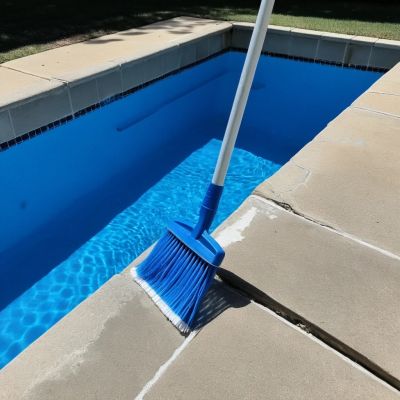
Call 469-200-3420 for a free quote

Blue pool brush on a telescopic pole resting on the stone coping beside clear water at a Prosper TX

Not sure what your pool needs? Ask us.

469-200-3420

Call us for a free quote.

When a Homeowner Can Handle Vacuuming Alone

Plenty of people vacuum their own pool, and they do a good job of it. If you're one of them, here's how to tell whether that's working for you.

Doing it yourself tends to work well if most of these sound like you:

  • You have 30 to 45 minutes each week and you use them for the pool.
  • Your floor still looks clear by midweek, not just the day you clean it.
  • You empty the skimmer and pump baskets on your own without being reminded.
  • You already test your water as often as CDC recommends (at least twice a day for chlorine and pH), so a clear floor isn't the only thing you check.
  • Your yard doesn't drop much into the pool. Few trees and no open lots nearby mean lighter debris.

Sometimes you don't need to vacuum at all. A few floating leaves come out faster with a leaf net than a vacuum. If a robot cleaner runs a couple of times a week and you empty its bag after each run, it may cover the floor on its own.

If you vacuum by hand, a few habits make a big difference:

  • Fill the hose with water before you hook it to the skimmer. Air in the line can make your pump lose prime.
  • Move slowly. Fast strokes kick fine dirt back into the water, and it settles again an hour later.
  • Overlap your passes a little, like mowing a lawn, so you don't leave stripes behind.
  • Spend extra time in the corners, on the steps, and under ladders. Those low-flow spots hold the most dirt.
  • Check the pump basket when you're done. A good vacuuming can fill it fast.

Timing matters too. After a windy stretch or a hard storm in Prosper, a quick pass the next day is easier than waiting for your usual cleaning day. That gets the leaves out before they soak through and sink.

It's also fair to admit when doing it yourself has stopped working. That usually doesn't come down to skill. It comes down to life getting busy. Watch for these signs:

  • You keep pushing it to next weekend, and next weekend becomes two weeks.
  • Brown leaf marks show up on the plaster where debris sat too long.
  • The floor feels slick or looks green, not just dirty.
  • You travel often, and nobody tends the pool while you're gone.

A slick or green floor is the one to take seriously. Vacuuming won't fix it on its own, because, as we covered earlier, a vacuum pulls out debris but doesn't treat the water. That's a chemistry problem, and it needs testing and balancing, not more passes with the hose.

Homeowner seen from behind in a cap and gray shirt holding a pool pole in a Prosper TX backyard

What Drives the Cost of Pool Vacuuming

Most pool services don't charge for vacuuming by itself. It's usually part of a bigger package. Knowing how that works makes it easier to compare quotes and spot what's missing.

You'll usually run into one of three pricing setups:

  • A weekly service plan. Vacuuming is one task in a set visit, billed per visit or as a monthly rate.
  • A one-time cleanup. This is a single visit for a pool that's fallen behind, often after a storm or a long trip.
  • A recovery job. A green or badly neglected pool needs much more than vacuuming, so it's priced as its own project. Pool Clean offers green pool recovery as a separate service.

Within any of those setups, a few things move the cost up or down.

  • Pool size. More floor means more time with the vacuum.
  • Shape and features. Steps, benches, tanning ledges, and tight corners take longer to clean than a plain floor.
  • Debris load. A pool under trees or next to open ground fills up faster than one in a bare yard.
  • How often it's cleaned. Weekly visits keep each job small. Skipped weeks mean heavier cleanups.
  • Starting condition. A pool with stains, silt, or algae takes more work than one that's been kept up.
  • Chemicals. Some quotes include water treatment chemicals and some charge for them separately. This one detail can make two quotes look far apart when they aren't.
  • Equipment condition. A weak pump or a clogged filter makes vacuuming slower and less effective.

Debris load matters a lot in Prosper. Wind, pollen, and dirt from nearby building sites keep landing in pools all year, so a backyard that looks quiet in winter can need a lot more work by spring.

A low quote isn't always the better deal. If a visit covers only a quick pass with the vacuum, the parts that keep water safe can get skipped. That's the clean-versus-sanitary gap we covered earlier. A cheaper visit that leaves the chemistry unchecked can cost you more later in cloudy water, stained plaster, or worn equipment.

Before you hire anyone, ask these questions:

  • Is vacuuming included every week, or only when it looks needed?
  • Are chemicals part of the price, or billed on top?
  • Do you test and balance the water on every visit, and how do you test it?
  • What happens to the debris? Is it hauled off or left in my bin?
  • Will I get a report after each visit showing what was done?
  • What happens if weather pushes my service day?

Clear answers to those questions tell you more than the price alone. Our team will walk you through each one before you book. We'll tell you what your pool needs and what's included, so the quote you get is the quote you pay.
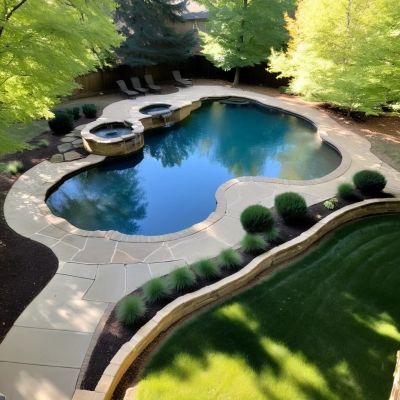
Call 469-200-3420

Large freeform backyard pool and spa surrounded by oak trees and stone decking in Prosper TX

Frequently Asked Questions

Common questions about vacuuming in Prosper

It depends on how much time and attention you can give it each week. If you have 30 to 45 minutes free, already test your water, and your yard doesn't drop much debris, handling it yourself can work fine. If you keep pushing the job back, or you notice brown leaf marks on the plaster, that's a sign it's time for weekly help.


Slow strokes keep dirt from clouding your water again. Fast passes kick fine dirt and silt back into the pool, and it just settles back down an hour later. Moving slowly, with a little overlap between passes like mowing a lawn, gets more debris out in one pass instead of stirring it around.


Debris never stops arriving. It just drifts in a little at a time. In Prosper, wind, nearby construction dust, spring pollen, and storm runoff all keep landing on the water between visits. A skimmer only catches what's floating, so anything that sinks, like fine dirt or soaked leaves, sits on the floor until the next vacuuming.


Ready to Get Started?

Call 469-200-3420 today.

Get a Free QuoteCall 469-200-3420
  • Home
  • Contact
  • About
  • Services
  • Privacy Policy

POOL CLEAN

2813 Little Current Ct, Celina, TX 75009, USA

469-200-3420 | service@poolclean.us

Copyright © 2026 Pool Clean - All Rights Reserved.

Powered by