Pool Clean
  • Home
  • Contact
  • About
  • Services
  • Privacy Policy
  • Sign In
  • Create Account

  • My Account
  • Signed in as:

  • filler@godaddy.com


  • My Account
  • Sign out

Pool Clean

Signed in as:

filler@godaddy.com

  • Home
  • Contact
  • About
  • Services
  • Privacy Policy

Account


  • My Account
  • Sign out


  • Sign In
  • My Account
Backyard pool at golden hour with a stone patio, dining table and mature oak trees at a home in Pros

Pool Water Treatment in Prosper, TX

Keeping your pool spotless — owner-operated pool service in Prosper, Celina & McKinney

Get a Free QuoteCall 469-200-3420

✓ Owner-Operated

🛡 Photo Report After Every Visit

⭐ 5-Star Rated on Google

⚡ No Contracts

What's Covered on This Page

  • Clear Water Is Not Always Safe Water
  • Signs Your Pool Needs Water Treatment Now
  • When DIY Balancing Is Enough
  • How Pool Clean Tests and Treats Water
  • What Happens During Green Pool and Algae Recovery
  • How long does green pool recovery usually take?
  • Can I swim while my pool is being treated for algae?
  • Why does my pool water smell strongly of chlorine even though I just added some?

Need help with your pool water?

469-200-3420

Free quote, no contracts

Clear Water Is Not Always Safe Water

A pool can look crystal clear and still be unsafe to swim in or slowly damaging your plaster and equipment. Clean means the water looks good. Sanitary and balanced means it's doing its job, and that's what real water treatment is for.

White floating chlorine dispenser drifting on clear blue water in a Prosper TX backyard pool

Here's the part most pool owners don't hear. Your eyes can tell you if water is clean. They can't tell you if it's sanitary.

Clean water has no leaves, no dirt on the floor, and no cloudy haze. You can see the drain from the deck. That's good, but it's only half the job.

Sanitary water has enough active sanitizer to keep germs and algae in check, and its chemistry is balanced so the sanitizer can work. Water can pass the eye test and still fall short here. Algae and bacteria don't always show up right away. By the time you see green or feel a slimy wall, the problem has usually been building for a while.

Heat makes this worse. In a Prosper summer, strong sun and warm water eat through chlorine faster, so a pool that tested fine early in the week can run low by the weekend. It still looks clear. It just isn't protected anymore.

Then there's balance. Our team is trained in the Langelier Saturation Index, or LSI. It's a way of reading several numbers together instead of one at a time:

  • pH
  • Total alkalinity
  • Calcium hardness
  • Water temperature
  • Total dissolved solids

LSI tells us whether your water leans one of two bad ways. If it's corrosive, it pulls minerals out of whatever it touches. Over time that can etch plaster, rough up surfaces, and wear on metal parts in your heater and equipment. If it leans the other way and starts to scale, it leaves chalky, crusty deposits on tile, in the plumbing, and inside equipment.

Either way, the water can look perfectly clear while it does this damage. A single pH reading won't catch it. Reading the numbers together will.

That's why we don't treat water by sight. We test it, read it as a whole, and adjust it so it's both sanitary for swimmers and balanced for the pool itself.

You don't have to take our word for it, either. After every visit, you get a photo report that shows your chemistry readings and a safe-to-swim time. If your kids want to get in the pool the afternoon we leave, you'll know when it's ready. You won't be guessing based on how blue it looks.

A clear pool is nice to look at. A sanitary, balanced pool is safe for your family, and it's easier on the surfaces and equipment you paid for. Good water treatment is built to give you both.

Signs Your Pool Needs Water Treatment Now

Even though clear water can still be out of balance, your pool will often give you a few hints before things go fully wrong. If you know what to look for, you can catch a problem while it's still small.

Here's what to watch for, sorted by what you'll notice first.

What you see in the water:

  • A dull or hazy look, where the drain looks a little fuzzy from the deck
  • A faint green or yellow tint, especially in corners, on steps, or behind ladders
  • Water that clears up after you run the pump, then turns cloudy again in a day or two
  • Foam or a film on the surface that keeps coming back

Cloudiness and tint are early warnings. They usually mean the sanitizer is losing ground or the balance has drifted, and algae is getting a foothold you can't fully see yet.

What you feel:

  • Slick or slimy walls, steps, or benches when you run a hand across them
  • Red, stinging eyes or itchy skin after a swim
  • A strong, sharp chemical smell around the pool

That last one surprises a lot of people. A strong "chlorine" smell doesn't mean there's plenty of chlorine. It often means the chlorine is used up and tied to sweat, sunscreen, and other waste swimmers bring in. A well-treated pool shouldn't smell like much at all.

What you notice on surfaces and equipment:

  • White or gray crusty buildup along the tile line
  • Plaster that feels rough or sandpapery underfoot
  • Stains or discoloration on the pool floor or around fittings
  • Chalky deposits on ladders, rails, or around return jets

These point to water that's leaning toward scale or toward corrosion. They build slowly, so they're easy to miss until the damage is already there. That's where reading the numbers together, the way we described above, earns its keep.

Timing matters too. Some moments put extra stress on your water even if nothing looks wrong yet:

  • After a heavy Prosper thunderstorm, when rain dilutes your chemicals and washes dirt and debris in from the yard
  • After a pool party or a busy weekend with lots of swimmers
  • During a long stretch of hot, sunny days, when sanitizer burns off faster
  • After the pool has sat untested for a week or more while you were traveling

If one of these just happened, it's a good time to test, even if the water still looks fine.

One more thing. If you walk out and the whole pool is green and you can't see the bottom, that's past routine water treatment. That's a green pool recovery, which is its own job with its own steps. Pool Clean's weekly water treatment is about keeping you from ever getting to that point.

If you're not sure whether what you're seeing is a real problem, that's normal. Most of these signs look minor on their own. Our team tests the water and reads it as a whole, so you get a clear answer instead of a guess, and the photo report shows you exactly what changed.

That same focus carries through the practical pool clean guidance our team provides to local families.

Cloudy turquoise pool water and tiled waterline with mineral buildup at a Prosper TX pool

When DIY Balancing Is Enough

Plenty of pool owners take care of their own water, and many do it well. Here's the honest answer on when doing it yourself is enough.

DIY usually works fine if most of these are true for you:

  • You test the water on a set schedule, not just when something looks off.
  • You use a good test kit that reads more than chlorine and pH, so you can check the other numbers that affect balance.
  • You write your readings down, so you can spot a slow drift before it turns into a problem.
  • You're home most weeks and don't leave the pool untested while you travel.
  • Your pool sees light use, like a few swims a week instead of a full yard of kids every afternoon.
  • You enjoy the routine and don't mind spending time on it.

Season matters too. In Prosper, the cooler months are the easiest time to handle things yourself. The water's colder, fewer people swim, and the sun isn't burning through sanitizer the way it does in July. A pool that's hard to keep up with in August can be pretty easy in December.

There are also times when you're better off waiting. If you just added chemicals, give them time to mix and circulate before you test again or add more. Chasing a number too fast is one of the most common ways people overshoot and end up fixing the fix.

Where DIY tends to fall short isn't skill. It's consistency. Life gets busy, a week slips into two, and the testing gets skipped right when the weather heats up. The other gap is reading the numbers together. Checking chlorine and pH alone can make the water look fine on paper while it leans toward scale or corrosion, as we covered earlier.

So be honest with yourself about two things. Do you test as often as CDC recommends (at least twice a day for chlorine and pH), even in the busy months? And do you look at the full picture, not just one or two readings?

If you're not sure where you stand, the warning signs in the section above are a good gut check.

Blue bucket of white chlorine tablets and a small bottle on the stone deck for routine balancing at

Need help with water treatment?

469-200-3420

Call us for a free quote.

How Pool Clean Tests and Treats Water

If the DIY routine isn't a fit for you, here's what you get from us instead. Water treatment works best as part of a full visit, not as a quick splash of chemicals. Leaves, dirt, and buildup use up sanitizer. If the pool isn't clean, the chemistry has to work harder just to keep up.

So the cleaning comes first, and we do it the same careful way every time.

  • We hose out the skimmer baskets so they're clean, not just emptied.
  • We lube the O-ring every week so it seals the way it should.
  • We vacuum before we brush, so we pick up debris instead of stirring it back into the water.
  • We bag the debris and haul it off. It doesn't end up in your trash can or flower beds.

Then we test. Our team uses the LSI method we covered above, so we're reading your water as a whole instead of chasing one number. We adjust based on what the readings show that week, not on a set dose we add every time. Your pool's needs shift with weather, swimmer load, and season, so the treatment shifts with them.

Every visit is logged in our service software. Within a short time of each stop, you get a photo report with:

  • Your chemistry readings for that visit
  • Photos of the pool after the work is done
  • A safe-to-swim time, so you know when the family can get back in
  • A photo of your gate closed behind us

That record matters more than it sounds. When you can see your readings week after week, you can tell your water is holding steady. If something starts to drift, it shows up in the numbers before it shows up in the pool.

Consistency is the other half of good treatment. We come the same day every week. If weather pushes a visit, we tell you ahead of time. You won't have to wonder whether someone showed up. If we say we'll be there, we'll be there.

We also treat your property with respect. Our team wears a clean, logo'd uniform and parks at the curb. We stay focused on the pool and leave the rest of your yard the way we found it.

Pool Clean is owner-operated, and our owner has about 30 years of hands-on pool care, including decades of keeping up his own pool and swapping out his own pumps. That experience goes into how we read water and what we do about it. We serve homes across Prosper, Celina, and McKinney on a set weekly route.

If something beyond chemistry turns up during a visit, like a filter that's struggling or a salt system that isn't keeping up, we'll note it in your report. Those repairs are separate services, and we'll talk with you before doing any of them.

Call 469-200-3420 for a free quote

Gloved hand dipping a clear sample cup into the water at the edge of a Prosper TX pool

What Happens During Green Pool and Algae Recovery

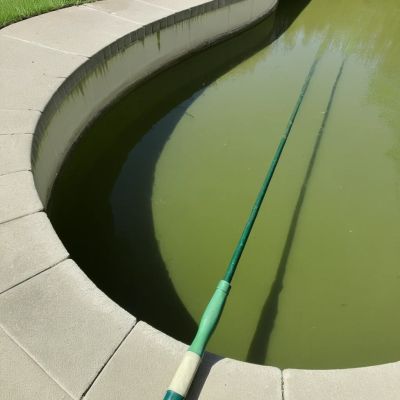
A green pool means algae has outgrown the sanitizer. Once that happens, a normal weekly dose of chemicals won't catch up. The algae is using up sanitizer as fast as it goes in. That's why green pool recovery is its own job, not just a heavier version of routine water treatment.

It happens to careful owners too. A pump stops running while you're out of town. A busy few weeks go by without testing. A Prosper summer heat wave burns through chlorine faster than you expected. Within days, clear water can turn cloudy, then green.

Here's what recovery generally looks like, so you know what to expect.

  • Check the equipment first. If the pump or filter isn't moving water, no amount of chemistry will fix the pool. Circulation has to work before anything else.
  • Clear out the heavy debris. Leaves and sludge on the floor feed algae and soak up sanitizer, so they come out early.
  • Bring the sanitizer up to the level the product label and your test results call for. The goal is to kill the algae, not just slow it down. If one round doesn't do it, test again before adding more.
  • Brush the walls, steps, and floor. Algae clings to surfaces and hides in corners. Brushing breaks it loose so the sanitizer can reach it.
  • Keep the filter running and keep it clean. Dead algae is what turns green water gray or cloudy, and it clogs a filter fast. The filter often needs cleaning more than once during recovery.
  • Vacuum out what settles. As the dead algae drops to the floor, it gets removed instead of being left to cloud the water again.

The color usually changes before the water is ready. Green turns to a dull blue-gray, then slowly clears. That middle stage can look like nothing is happening, but it often means the algae is dead and the filter is still catching up. Patience matters here. Pouring in more chemicals to rush it can create a new problem.

Clear isn't the finish line. As we covered at the top of this page, clean and sanitary aren't the same thing. After a bloom, the water's balance is often way off. Once the algae is gone, our team tests with the LSI method and rebalances the water. That way the pool isn't just clear again. It isn't quietly working on your plaster or equipment, either.

Stay out of the water until it tests safe. Green or cloudy water isn't safe to swim in. Your photo report shows the chemistry readings and a safe-to-swim time, so you'll know when the family can get back in.

Sometimes a green pool points to a bigger cause, like a worn filter, a failing pump, or a salt system that isn't producing. If that turns up, we'll note it in your report and talk with you before doing any repair. Fixing the cause is what keeps the pool from turning green again a month later.

After recovery, steady weekly water treatment is what keeps the pool from sliding back.
Call 469-200-3420

Pool pole reaching into murky green algae water at a stone-edged Prosper TX pool

Frequently Asked Questions

Common questions about water treatment in Prosper

It depends on how bad the algae bloom is, but you can expect several days, not hours. The water has to shift from green to a dull blue-gray before it starts clearing, and that middle stage can look like nothing is happening while the filter keeps catching dead algae. Pouring in extra chemicals to speed things up often backfires and creates a new problem, so patience during that stage matters more than speed.


No, you should stay out until the water tests safe. Green or cloudy water isn't safe to swim in, even if it starts looking better partway through recovery. Your photo report after the visit shows the chemistry readings and a safe-to-swim time, so you know exactly when the family can get back in instead of guessing from how the water looks.


A strong chemical smell usually means your chlorine is used up, not that you have plenty of it. The smell comes from chlorine reacting with sweat, sunscreen, and other waste swimmers bring in, not from fresh sanitizer doing its job. A well-balanced pool shouldn't have much smell at all, so a sharp odor is a sign to test your water soon.


Ready to Get Started?

Call 469-200-3420 today.

Get a Free QuoteCall 469-200-3420
  • Home
  • Contact
  • About
  • Services
  • Privacy Policy

POOL CLEAN

2813 Little Current Ct, Celina, TX 75009, USA

469-200-3420 | service@poolclean.us

Copyright © 2026 Pool Clean - All Rights Reserved.

Powered by